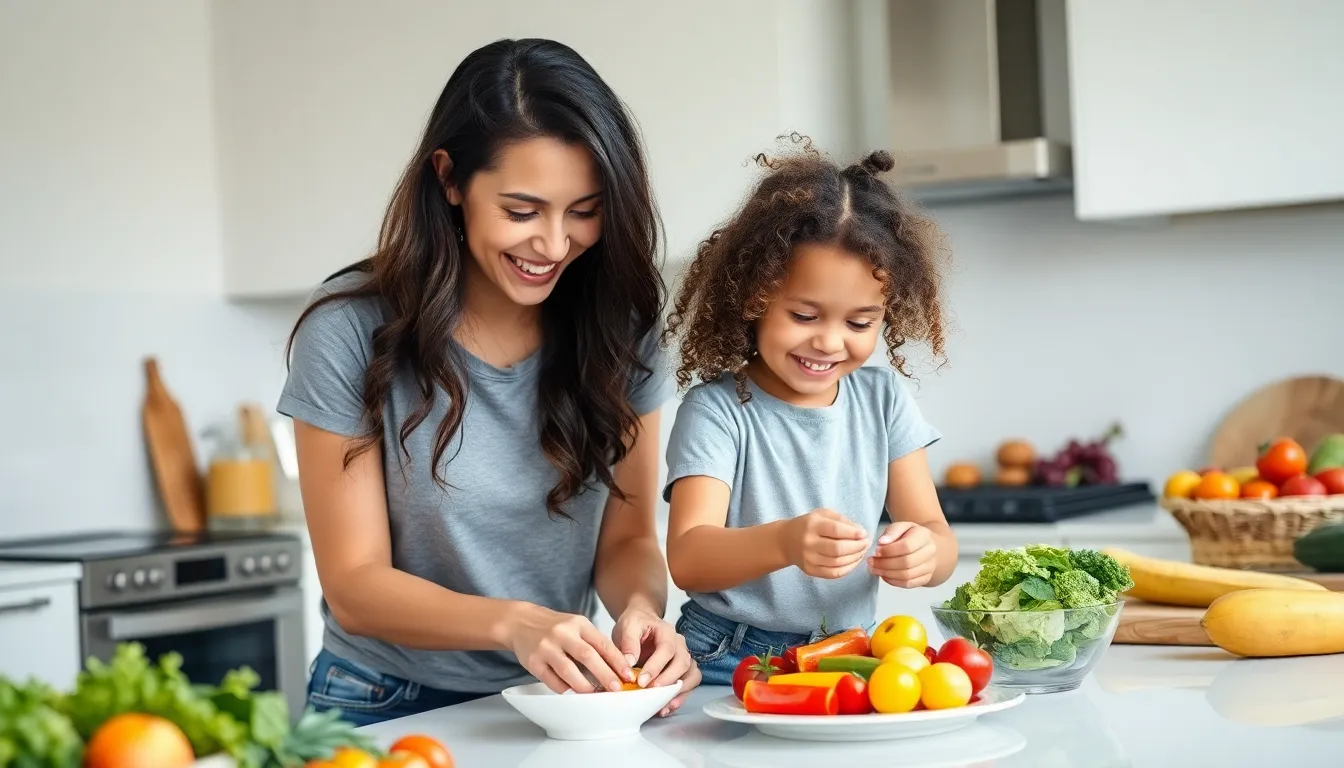
When it comes to kids and their meals, it’s like trying to negotiate with a tiny food dictator. One minute they’re devouring broccoli like it’s candy, and the next, they’re eyeing the cookie jar like it holds the secrets to the universe. Portion control for kids isn’t just about keeping the peace at the dinner table; it’s a vital skill that sets the stage for healthy eating habits.
Imagine a world where kids learn to balance their plates without turning mealtime into a food fight. By teaching them the art of portion control, parents can help children understand their hunger cues and make healthier choices. After all, a well-fed child is a happy child—unless they’re too full to move, of course! Let’s dive into the fun and practical ways to master portion control, so everyone can enjoy mealtime without the drama.
Table of Contents
ToggleUnderstanding Portion Control for Kids
Teaching kids portion control helps them develop healthy eating habits. Recognizing appropriate serving sizes benefits their overall well-being.
Importance of Portion Control
Portraying balanced meals fosters nutritional growth. Developing an understanding of portion sizes encourages kids to know when they’re full. Establishing these habits early creates a foundation for lifelong healthy choices. Research shows that children who practice portion control maintain healthier weights and experience fewer nutrition-related health issues. Parents can use visual aids, like plates or cups, to demonstrate proper portions. Effective portion control can also reduce food waste, making meals more enjoyable for everyone involved.
Common Challenges Parents Face
Parents encounter difficulties with portion control, particularly with picky eaters. Kids may refuse certain foods or demand more of their favorites. Peer influence can complicate meal choices, causing kids to want larger portions. Time constraints often lead to more significant servings as parents rush meal preparation. Understanding and addressing these challenges requires patience and creativity. Parents can promote positive eating habits by modeling portion control and making mealtime fun. Engaging kids in meal planning and preparation can empower them to take ownership of their food decisions.
Benefits of Proper Portion Sizes
Teaching children proper portion sizes offers numerous advantages. It plays a vital role in maintaining a healthy weight and reduces the risk of childhood obesity.
Healthy Weight Management
Implementing appropriate portion control helps children manage their weight effectively. Research shows that kids who practice portion control often maintain healthier weights compared to those who do not. Smaller, balanced portions lead to fewer excess calories consumed. Regularly monitoring serving sizes encourages children to tune in to their hunger cues, guiding them towards more mindful eating. Moreover, this practice fosters a sense of responsibility regarding food choices. By understanding how portion sizes impact their bodies, children can develop healthier relationships with food.
Encouraging Balanced Eating Habits
Portion control also cultivates balanced eating habits in kids. Consistent practice encourages a variety of foods on their plates, promoting a diverse intake of nutrients. Teaching children to include fruits, vegetables, proteins, and whole grains in appropriate amounts enhances their overall diet quality. Sessions involving meals and snacks that focus on correct portion sizes provide children with visual cues for future eating scenarios. These practices not only limit unhealthy food intake but also instill a sense of balance in their diets. Engaging kids in planning meals can reinforce these lessons, making healthy eating enjoyable and achievable.
Strategies for Implementing Portion Control
Implementing portion control for kids involves practical strategies that make mealtime smoother. Parents can utilize visual aids to help children understand appropriate serving sizes.
Use of Visual Aids
Visual aids serve as effective tools for teaching portion control. Using plates with labeled sections can clearly demonstrate appropriate amounts for different food groups. Moreover, employing measuring cups reinforces this concept further, allowing kids to see how much food fits into each portion. Pictures of portion sizes compared to common objects, such as a baseball for a serving of fruit, make learning engaging. Displaying these visuals in the kitchen ensures continuous learning and encourages children to apply these lessons at every meal.
Serving Sizes for Different Age Groups
Understanding serving sizes based on age is crucial for effective portion control. For toddlers aged 1 to 3 years, serve about ½ cup of grains and 1 ounce of protein per meal. Preschoolers aged 4 to 5 require slightly larger portions, approximately 1 cup of grains and 2 ounces of protein. School-aged children typically need 1 to 1.5 cups of grains and up to 3 ounces of protein to meet their energy demands. Tailoring portions according to each age group’s nutritional needs helps maintain balanced eating habits. Parents can refer to established dietary guidelines to ensure serving sizes align with healthy growth and development.
Tips for Parents and Caregivers
Creating a supportive atmosphere during meals enhances children’s engagement with food. A calm setting encourages exploration of different foods and portion sizes. Arrange the dining area to minimize distractions, allowing for focused mealtime interactions. Positive reinforcement throughout meals promotes better eating habits. Avoid pressure to finish plates, as this can lead to unhealthy associations with food. Using colorful plates and presenting food attractively can also increase children’s interest in trying new items.
Encouraging kids to recognize their hunger cues establishes a deeper connection with their body. Teach them to distinguish between hunger and boredom or thirst by asking guiding questions. During meals, pause and discuss feelings of fullness or satisfaction. Helping kids identify these sensations can lead to better self-regulation around food. Engage in conversations about how they feel before, during, and after meals. Make exploration of these cues an ongoing dialogue, reinforcing healthy eating habits over time.
Teaching kids portion control is essential for fostering healthy eating habits that last a lifetime. By empowering children to understand their hunger cues and recognize appropriate serving sizes, parents can help them develop a positive relationship with food. This practice not only supports nutritional growth but also encourages balanced eating, reducing the risk of obesity and related health issues.
Creating a supportive mealtime environment enhances children’s engagement and enjoyment of food. With patience and creativity, parents can model healthy behaviors and involve kids in meal planning. Ultimately, mastering portion control leads to happier mealtimes and sets the stage for a healthier future.